Your Brand-New Roof Is Already Dying — And the Installer Knew It Would
There's a particular kind of frustration that hits when you've just spent $15,000 on a new roof and a neighbor — or worse, a home inspector — points out that your shingles are already curling at the edges. You did everything right. You got multiple quotes, you picked a reputable brand, you didn't cheap out. And yet, here you are.
The uncomfortable truth is that premature shingle deterioration is far more common than the roofing industry likes to admit. And most of the time, the damage isn't caused by bad luck or bad weather. It's baked into the installation itself — sometimes through negligence, sometimes through corner-cutting, and sometimes because a crew was moving too fast to care.
Let's break down what's actually happening.
What "Curling" Is Telling You (And What It Isn't)
When shingles curl, most people assume they've got a defective product. That's the easy assumption, and manufacturers are happy to let you keep making it — because it shifts the conversation away from installation and toward a warranty claim that's almost impossible to collect on.
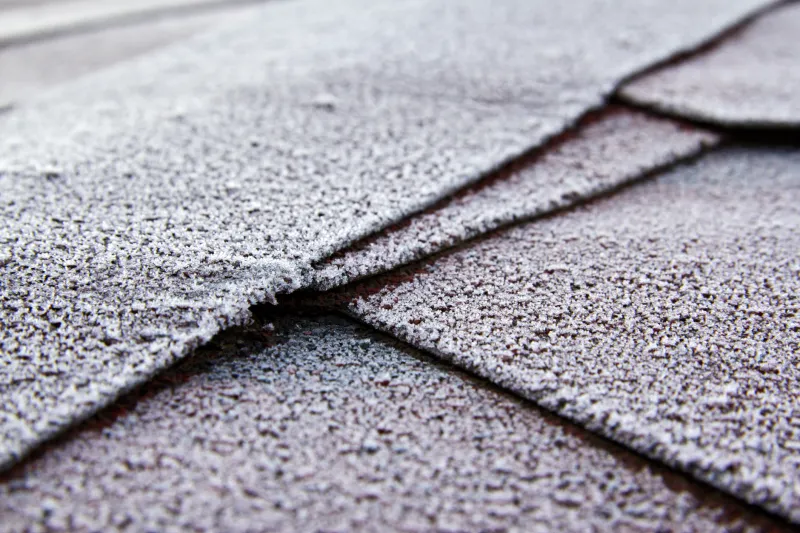
Shingle curling typically shows up in two forms: cupping, where the edges turn upward like a bowl, and clawing, where the middle of the shingle lifts while the edges stay flat. Both are signs that the shingle is under stress — thermal, moisture-related, or mechanical. But the source of that stress is where the real story lives.
A shingle sitting in a showroom is stable. Put it on a roof with poor airflow underneath, nail it in the wrong spot, or lay it over a substandard underlayment, and you've created the conditions for early failure before a single rainstorm rolls through.
The Ventilation Factor Nobody Wants to Talk About
If there's one root cause that shows up again and again in premature shingle failures, it's attic ventilation — or the lack of it. We've touched on this in other pieces, but it's worth hammering home in this context specifically.
Heat builds up in an attic. In summer, an under-ventilated attic can reach temperatures north of 150°F. That heat radiates upward into the roof deck and the shingles themselves. Over time — and we're talking months, not years — that repeated thermal cycling breaks down the asphalt binders in the shingles. The granules loosen. The mat beneath weakens. And the shingles start to move.
Here's the kicker: a roofing crew can install a perfectly code-compliant shingle layer and still leave you with a ventilation setup that's quietly cooking your investment from below. Unless you specifically asked about ridge vents, soffit vents, and the overall airflow calculation for your attic space, there's a real chance nobody thought about it.
Before you sign any roofing contract, ask the contractor to walk you through the ventilation plan. If they look at you blankly, that's your answer.
Nailing It — Literally — Matters More Than You Think
Installation angle and nail placement sound like the kind of technical details that only matter to engineers. In practice, they're the difference between a roof that lasts 25 years and one that starts showing stress in three.
Shingles have a nailing zone — a specific horizontal band where fasteners are supposed to go. Drive a nail too high (called "high nailing"), and the shingle isn't properly locked down. Wind gets underneath. The shingle flexes. Over time, it lifts, curls, and eventually fails. Drive it too low, and you're puncturing the shingle's waterproof zone, creating a slow-motion leak.
A fast crew — and fast crews are extremely common in this industry — can high-nail an entire roof without a homeowner ever knowing. It's not visible from the ground. It doesn't show up on a casual inspection. But it will show up eventually, usually right around the time your warranty is getting cozy with its expiration date.
Ask your contractor whether they use nail guns with depth gauges. Ask whether the crew lead does a spot check of nail placement before wrapping up each section. These aren't unreasonable questions. A contractor worth hiring won't be offended by them.
Underlayment: The Invisible Layer That Does the Heavy Lifting
Under every shingle layer is an underlayment — a secondary moisture barrier that most homeowners never see and rarely think about. It's also where a surprising number of contractors quietly cut costs.
There's a significant difference between 15-pound felt paper and a high-quality synthetic underlayment. The felt is cheap, widely available, and still used on a lot of roofs despite the fact that it tears easily, absorbs moisture, and can wrinkle during installation in ways that create uneven surfaces beneath the shingles. Those uneven surfaces? They create stress points that accelerate curling and cracking in the shingles above.
Synthetic underlayments are more expensive — sometimes meaningfully so — but they're also more dimensionally stable, more resistant to moisture absorption, and less likely to create problems down the line. A contractor who's bidding low might be making up the margin right here, in a layer you'll never see.
When you're reviewing a roofing proposal, ask specifically what underlayment product is being used and why. If the answer is vague, push harder.
The Manufacturer's Warranty Won't Save You
This is the part that stings. Most shingle warranties — even the ones that sound impressively long — have clauses that make them nearly impossible to collect on when premature failure is installation-related rather than material-related.
Manufacturers know that ventilation problems, improper nailing, and low-grade underlayment cause shingle failure. Their warranties are written with that knowledge in mind. If your attic doesn't meet their ventilation specifications (and good luck finding those specs buried in the warranty document), your claim can be denied. If the installation doesn't meet their guidelines — guidelines that were the contractor's responsibility to follow — you're often left holding the bag.
The protection you actually need comes from the contractor's workmanship warranty, not the product warranty. And workmanship warranties vary wildly. Some contractors offer two years. Some offer ten. Some offer nothing in writing at all.
Get the workmanship warranty in writing. Read it. Ask what specifically is and isn't covered. A contractor who's confident in their work won't hesitate.
What You Can Do Right Now
If you've got a newer roof that's already showing signs of curling or granule loss, don't wait. Get an independent inspection from someone who isn't affiliated with the original installer. Document everything — photos, dates, the original contract, any communication with the contractor.
If you're still in the planning phase, slow down. The lowest bid is rarely the best deal. Ask detailed questions about ventilation, nail placement protocols, and underlayment selection. A contractor who can answer those questions clearly and confidently is showing you something important about how they operate.
At 1BF Roofing & Exteriors, we built our reputation on doing the work right the first time — not on being the fastest quote in the stack. A roof isn't just shingles. It's a system, and every part of that system has to be installed with intention.
Your roof should be the last thing on your mind for the next 20 years. Make sure the people putting it on feel the same way.