The Metal You Never Think About Is the One That Will Ruin Your Roof
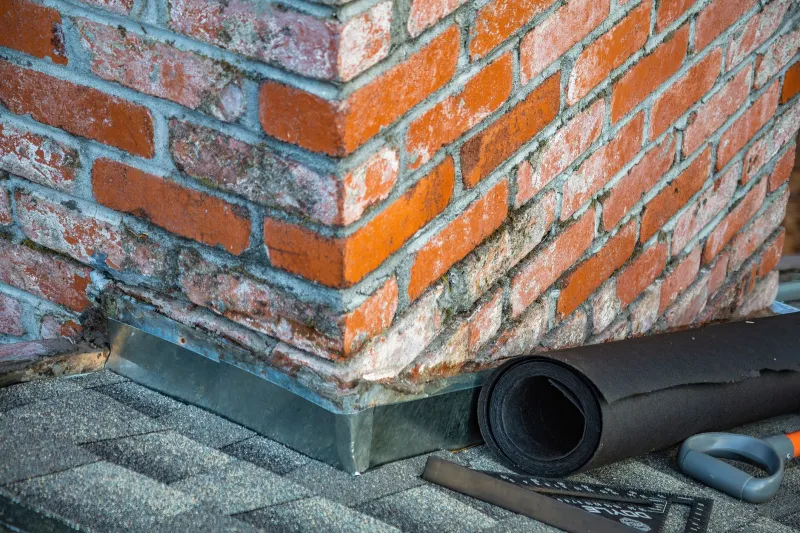
Ask any homeowner what their roof is made of, and they'll probably tell you the shingle color and brand. Maybe even the manufacturer warranty. What they almost certainly won't mention is flashing — those thin strips of metal tucked around chimneys, skylights, valleys, and vents that are quietly doing some of the heaviest lifting on the entire roof system.
That's a problem. Because in our experience at 1BF Roofing & Exteriors, flashing failures are behind a staggering number of the worst water damage situations we walk into. Not bad shingles. Not missing gutters. Bad metal work — or worse, metal work that looks fine from the driveway but was installed with shortcuts that guarantee failure within a few years.
Here's what you need to know before that quiet little flaw becomes a very loud, very expensive catastrophe.
What Flashing Actually Does (And Why It's Non-Negotiable)
Flashing exists to solve a fundamental problem: your roof is not one continuous surface. It has joints — places where the roofing material meets a wall, a chimney, a pipe, a valley, or a dormer. Water, being water, will find every single one of those joints and try to push through. Flashing creates a waterproof bridge across those transitions.
When it's done right, water hits the flashing, gets redirected, and runs harmlessly off the roof. When it's done wrong — or done cheap — water finds the gaps, seeps in behind the material, and starts working on your decking, your insulation, your framing, and eventually your ceilings and walls. The worst part? That process can take months or even years before you see a single stain inside your home. By then, the damage is often in the tens of thousands of dollars.
The Shortcuts That Are Plaguing the Industry
Let's be blunt: flashing is one of the easiest places for a contractor to cut corners, and a lot of them do. Here's what we see constantly:
Using the wrong gauge metal. Proper flashing should be made from 26-gauge galvanized steel, aluminum, or — on high-end installs — copper. Some contractors use the thinnest, cheapest sheet metal available, which corrodes faster, warps under temperature swings, and develops pinhole leaks within a few years.
Reusing old flashing. This one drives us crazy. When a new roof goes on, the flashing should almost always be replaced too. Plenty of contractors leave the original flashing in place to save time and material costs. The problem is that old flashing has already been through years of expansion, contraction, and weathering. Its seal is compromised. Slapping new shingles over degraded flashing just buries the problem — literally.
Skipping step flashing in favor of continuous flashing. Where a roof meets a vertical wall — like beside a dormer or along a sidewall — step flashing is the correct method. It involves individual pieces of L-shaped metal woven between each course of shingles, creating overlapping layers that shed water at every point. Continuous flashing (one long piece bent at an angle) is faster and cheaper to install, but it's also far more prone to failure because it can't flex with the roof's natural movement without cracking the sealant.
Relying too heavily on caulk. Flashing should be mechanically sound — meaning the metal itself, properly lapped and layered, should do most of the work. Caulk and roofing sealant are finishing touches, not structural solutions. When a contractor uses caulk to compensate for poor flashing geometry or improper overlap, that seal will dry out, crack, and fail. It's just a matter of when.
Ignoring counterflashing at chimneys. A chimney requires two layers of flashing: base flashing that sits on the roof, and counterflashing that's embedded into the mortar joints of the chimney itself. Counterflashing is more labor-intensive to install correctly, so some contractors either skip it entirely or just surface-mount it with caulk. That joint between the chimney and the roof is one of the most common leak points we see — and it's almost always a counterflashing problem.
How to Inspect Your Flashing Before It Becomes a Disaster
You don't need to get on the roof yourself to get a basic read on your flashing's condition. Here's a practical approach:
Start from the attic. On a bright day, go into your attic with the lights off and look for any pinpoints of light coming through around the chimney, vents, or along the ridge. Also look for water stains on the decking or rafters — even old, dried stains indicate past moisture intrusion that should be investigated.
Use binoculars from the ground. You can actually see a lot from the yard with a decent pair of binoculars. Look at the flashing around your chimney, skylights, and any roof-to-wall transitions. You're looking for visible gaps, rust staining, lifting metal, or sealant that's clearly cracked and pulling away from the surface.
After heavy rain, check your ceilings. Water stains near a chimney, skylight, or exterior wall are almost always a flashing issue. Don't ignore them and don't just paint over them — find the source.
Get a professional inspection if your roof is over seven years old. Even a well-installed roof will start showing flashing wear in that timeframe, especially in climates with significant temperature swings. An experienced roofer can spot the early warning signs before they become structural problems.
What Proper Flashing Installation Looks Like
When 1BF Roofing & Exteriors installs or replaces flashing, here's what that process actually involves: new material every time (no recycling old flashing from a previous roof), correct gauge metal matched to the application, step flashing woven into every shingle course along vertical transitions, and counterflashing properly embedded in chimney mortar rather than surface-applied. Sealant is used to finish the job — not to hold it together.
It takes more time. It costs a little more in materials. And it's the only way to do it right.
If a contractor gives you a roof estimate and flashing isn't specifically mentioned — either as a line item or in the scope of work — ask about it directly. The answer you get will tell you a lot about who you're dealing with.
Don't Let the Small Stuff Sink Your Biggest Investment
Your home is almost certainly the largest financial asset you own. The roof is its first line of defense. And within that roof system, flashing is the detail that separates a roof that performs for 30 years from one that starts failing in five.
The shingles get all the attention. The flashing does all the quiet, critical work. Make sure whoever is touching your roof understands the difference — and has the track record to back it up.
At 1BF Roofing & Exteriors, we've built our reputation on doing the unglamorous stuff correctly. Because that's exactly where roofs are won or lost.