Before the Storm Hits: A Homeowner's Roof Readiness Guide for Hurricane Season
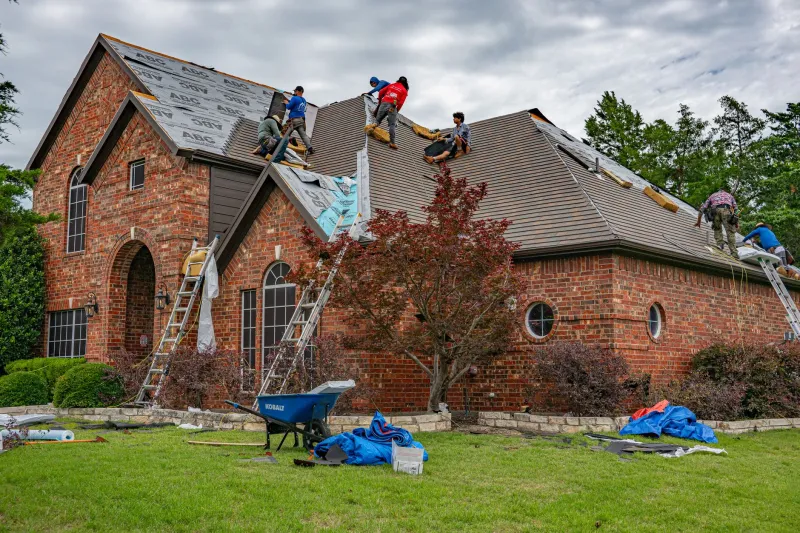
Every year, homeowners across the Gulf Coast, Southeast, and Eastern Seaboard get caught off guard. Not because storms are unpredictable — meteorologists give us plenty of warning these days — but because most people don't think about their roof until water is dripping through the ceiling. By then, the damage is done, the insurance adjuster is booked solid, and you're staring at a repair bill that could've been a fraction of the cost with a little prep.
At 1BF Roofing & Exteriors, we've seen what storm season does to homes that were one inspection away from being just fine. This guide is our way of helping you get ahead of it.
Start From the Ground: What You Can See Without a Ladder
You don't need to climb onto your roof to spot early warning signs. Stand back from your home and take a good, honest look at the roofline from a few different angles.
Are there any sections that look like they're sagging or dipping? Even subtle depressions in the roofline can signal structural issues underneath — weakened decking or damaged rafters that won't hold up under wind pressure or heavy rain. Look for shingles that appear to be curling at the edges or lifting at the corners. In high winds, those are the first pieces to go, and once one shingle lifts, the ones around it follow fast.
Also check your gutters from the ground. If they're pulling away from the fascia, clogged with debris, or visibly rusting, they won't channel stormwater effectively. Backed-up gutters can force water under your roofline and into your attic before a storm even hits its peak.
Shingle Condition: The First Line of Defense
Your shingles are the outermost layer of protection between your home and whatever the sky throws at it. After any significant wind event — even one that didn't seem that bad — it's worth doing a closer inspection.
Look for shingles that are cracked, missing granules (you'll notice bare, dark patches), or have started to buckle. Granule loss is more than cosmetic. Those tiny particles are what give asphalt shingles their weather resistance. Once they start shedding, the shingle's lifespan drops sharply, and its ability to resist wind uplift and water intrusion goes with it.
If you've had your roof for more than 15 years, pay extra attention here. Older shingles that look okay in calm conditions can fail fast under storm stress.
Flashing: The Sneaky Vulnerability Most Homeowners Miss
Flashing — the metal strips that seal joints around chimneys, skylights, vents, and roof valleys — is one of the most common sources of storm-related leaks. And it's easy to overlook because it doesn't look dramatic when it fails.
What you're checking for is separation, rust, or gaps where the flashing meets the roofing surface. Even a small lifted edge can allow wind-driven rain to push water deep into the roof assembly. Pay particular attention to the area around your chimney if you have one — chimney flashing takes a beating from temperature cycling year-round, and by the time storm season arrives, it may already be compromised.
Attic Inspection: Your Indoor Early Warning System
This one gets skipped constantly, and it's a mistake. Your attic can tell you a lot about what's happening up top without you ever setting foot on the roof.
Head up there with a flashlight on a sunny day and look for any pinpoints of daylight coming through the roof deck — those are gaps. Check the insulation and wood framing for staining or discoloration that would indicate past or ongoing moisture intrusion. Soft or spongy decking boards are a red flag that should be addressed before any storm rolls through.
Also check your attic ventilation. Proper airflow doesn't just regulate temperature — it helps manage moisture levels that can weaken roof decking over time. A poorly ventilated attic is a roof that's aging faster than it should.
Overhanging Trees and Debris: The Overlooked Exterior Threat
Your roof doesn't fail in isolation. Look at what's around it. Tree limbs hanging over or near your roofline become projectiles in high-wind events. Even branches that don't fall outright can scrape and abrade shingles repeatedly during a storm, wearing through the surface layer.
Trim back any limbs that extend over the roofline before peak storm season. It's one of the simplest, most cost-effective things you can do to protect your roof — and it's often something homeowners put off until it's too late.
When to Stop and Call a Pro
Here's the honest part: a lot of what we just described is something you can assess visually from the ground or from a quick attic check. But if you're seeing multiple issues — or any of the structural concerns like sagging, soft decking, or significant flashing separation — that's not a DIY situation.
Getting on a roof without proper training and equipment is genuinely dangerous, and an untrained eye can miss critical vulnerabilities that a professional contractor will catch in a single walkthrough. The cost of a pre-storm inspection is a fraction of what emergency repairs or full replacements run after a hurricane.
At 1BF Roofing & Exteriors, our inspection process covers every one of these checkpoints and then some. We don't just look for what's obviously broken — we assess what's likely to fail under storm conditions and give you a clear picture of where your roof stands before the weather gets serious.
Don't wait until the forecast turns ugly. If storm season is approaching and you haven't had a professional eye on your roof in the last year or two, now is the right time to schedule a visit. Built tough, finished right — that's how every roof we work on leaves our hands, and that's the standard your home deserves going into hurricane season.

