The Part of Your Roof Nobody Photographs — And Why That Should Terrify You
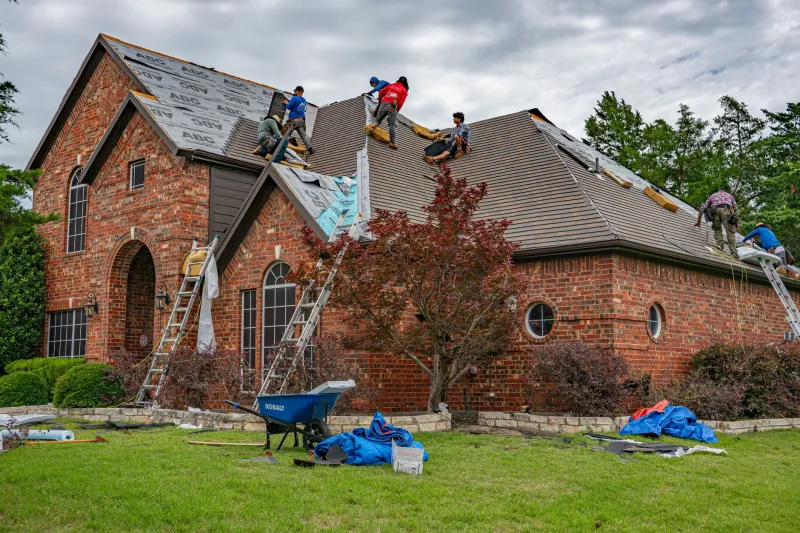
When a roofing job wraps up, homeowners typically get a tour of the shiny new shingles. Maybe a before-and-after photo of the ridge line. Possibly a shot of the crew cleaning up the yard. What they almost never get? A single photograph of the flashing.
That's not an accident.
Flashing — the thin strips of metal installed around chimneys, skylights, pipe boots, dormers, and wall intersections — is invisible once the job is done. It's buried under shingles, tucked behind siding, and sealed with caulk that looks the same whether it was applied correctly or slapped on in thirty seconds by a guy who had three other jobs to get to that afternoon. And because nobody's looking at it, nobody's accountable for it.
At 1BF Roofing & Exteriors, we've pulled back enough old roofs to know exactly what's hiding under there. A lot of it isn't pretty.
What Flashing Actually Does (And Why Skipping It Is Catastrophic)
Here's the basic physics: water runs downhill, and your roof is full of angles, edges, and penetrations that interrupt that flow. Every time a vertical surface meets a sloped one — your chimney against your roof deck, your skylight frame against surrounding shingles, a vent pipe punching through the field — you've got a seam. And seams are where water gets in.
Flashing is the system that bridges those seams. Done right, it creates a layered, overlapping barrier that redirects water away from the vulnerable joint and back onto the surface where it can drain safely. Done wrong — or skipped entirely — it creates a funnel that guides water straight into your home's structure.
The insidious part is that you won't know it's wrong for months, maybe years. Water damage from poor flashing is slow and cumulative. It soaks into the decking. It saturates the insulation. It travels along rafters and shows up as a stain on your ceiling two rooms away from where the actual breach is. By the time you notice something, the damage is already significant — and the contractor who installed your roof is long gone.
The Shortcuts That Are More Common Than You'd Think
Let's talk specifics, because the roofing industry has a well-worn playbook for cutting corners on flashing, and homeowners deserve to know what's in it.
Reusing old flashing. This is probably the most common shortcut. Your old chimney flashing is corroded, the sealant is cracked, and the metal has fatigued from years of thermal expansion. A responsible crew removes it and installs new. A cost-cutting crew bends it back, caulks over the cracks, and calls it done. It'll hold for six months. Maybe a year. Then it won't.
Step flashing replaced with a single piece of L-bracket. Proper step flashing along a dormer or sidewall is installed piece by piece, with each section overlapping the one below it in coordination with each shingle course. It's time-consuming. Some contractors replace the whole system with one continuous bent piece of metal, which looks similar from a distance but creates a single long failure point instead of a layered defense.
Over-reliance on sealant. Caulk and roofing cement are meant to supplement flashing, not replace it. When you see a blob of black sealant filling a gap around a skylight or chimney base, that's not a fix — that's a confession. Sealants dry out, crack, and fail. Metal flashing, properly lapped, doesn't need sealant to do its job.
Skipping counter-flashing on chimneys. A chimney requires two layers: base flashing that's integrated with the roof, and counter-flashing that's embedded into the chimney's mortar joints and laps over the base. Many budget contractors install only the base layer and seal the top edge with caulk against the brick. When that caulk fails — and it will — you've got a direct water path into your attic.
Why This Is the Easiest Place to Cheat You
Flashing isn't glamorous. It doesn't photograph well in a portfolio. Homeowners don't ask about it during the estimate process. And because it's hidden under the finished product, there's no visual cue that anything went wrong until the damage is already done.
For a contractor looking to shave a few hundred dollars off a job to win the bid, flashing is the obvious target. The materials are cheap either way, but proper installation takes real skill and time. Cutting corners there is nearly undetectable at the point of sale — which is exactly the problem.
This is especially true on re-roofing jobs where the old flashing is already in place. A homeowner who's just paid $15,000 for a new roof assumes the contractor started fresh. Many don't. And most homeowners would never know the difference.
What You Should Be Asking For Before You Pay
Here's the practical part. Before you sign off on any roofing job — new installation or replacement — you should be asking your contractor for photographic documentation of every flashing installation point. That means:
- Chimney base and counter-flashing — both layers, before sealant is applied
- Skylight perimeter flashing — all four sides
- Pipe boot flashing — each penetration
- Step flashing along any wall or dormer — ideally showing the layered installation in progress
- Valley flashing — open or closed, depending on your roof style
A contractor who does this work correctly won't blink at the request. They're proud of what's under there. A contractor who hedges, claims the crew already left, or tells you it's "all standard" without offering anything visual? That's your answer.
Also ask upfront whether old flashing will be replaced or reused, and get the answer in writing in your contract. If a contractor says they'll reuse existing flashing without inspecting it on-site first, that's a red flag before a single shingle comes off.
The Bottom Line
Flashing isn't a footnote in a roofing job. It's the detail that determines whether your investment holds up for twenty-five years or starts leaking in three. The contractors who treat it as an afterthought are counting on the fact that you'll never know what's under there.
At 1BF Roofing & Exteriors, we document it because we stand behind it. Built tough, finished right — and yes, photographed. Because the work we do in the spots nobody sees is exactly what defines whether we deserve your trust in the spots everybody does.