The Permit You Skip Today Is the Bill You Can't Escape Tomorrow
Let's be honest — when a contractor tells you they can knock a few hundred dollars off the job by "skipping the permit," it sounds pretty reasonable in the moment. You're already spending thousands on a new roof. Why add more to the bill for some bureaucratic paperwork that doesn't change a single shingle on your house?
Here's the problem: that logic makes sense right up until it completely falls apart. And when it does, it usually takes a chunk of your bank account with it.
At 1BF Roofing & Exteriors, we've watched too many homeowners find out the hard way that unpermitted roofing work isn't a shortcut — it's a delayed expense with interest. So let's break down what's actually going on when a permit gets skipped, what inspectors are really checking for, and why this matters a whole lot more than most people realize.
What a Roofing Permit Actually Covers
A lot of homeowners assume permits are just a local government money grab. That's not entirely unfair — the fees can sting. But the permit process exists for a real reason: it creates an official record that the work was done, inspected, and confirmed to meet local building codes.
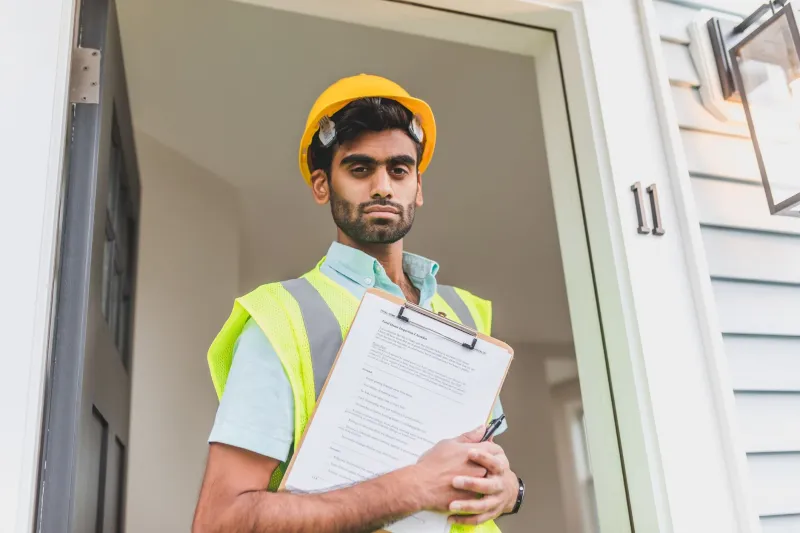
For a roof replacement, that typically means an inspector will verify things like:
- Proper decking condition and replacement where needed
- Correct underlayment installation
- Adequate ventilation meeting code requirements
- Flashing installation around penetrations, valleys, and edges
- Compliance with local wind and load requirements (which vary significantly depending on where you live)
In hurricane-prone states like Florida or Texas, those wind resistance requirements aren't suggestions — they're the difference between a roof that survives a storm and one that peels off it. An inspector is specifically checking that the installation meets those standards. Skip the permit, and nobody's verifying any of it.
The Insurance Nightmare Nobody Sees Coming
Here's where things get genuinely painful. Imagine a major storm rolls through your area two years after your roof was replaced. You file a claim. The insurance adjuster comes out, does their assessment, and then asks a question you weren't expecting: "Do you have the permit for this roof?"
If the answer is no, you've got a problem.
Insurance companies are increasingly savvy about unpermitted work. Many policies include language that allows them to deny or reduce claims if the damage involves unpermitted construction. The reasoning is straightforward from their end — if the work wasn't inspected, there's no way to confirm it met code, and they have no obligation to cover the consequences of substandard installation.
We've talked to homeowners who were looking at $15,000 to $20,000 in storm damage only to watch their claim get denied or drastically reduced because the roof replacement that preceded the storm was never permitted. The money they saved skipping the permit? A few hundred dollars. The money they lost? Far, far more.
What Happens When You Try to Sell Your Home
Real estate transactions have gotten a lot more thorough over the past decade. Buyers are hiring better inspectors, lenders are requiring more documentation, and title companies are doing deeper digs into property records. Unpermitted work has a way of surfacing right when you least want it to.
When a home inspector or buyer's agent discovers that a roof replacement was done without a permit, the deal can unravel fast. At minimum, you're looking at renegotiation — buyers will demand a price reduction or require the work to be permitted retroactively before closing. Retroactive permitting is its own ordeal: it often requires opening up finished work for inspection, and in some cases, corrections or full re-dos if the original installation didn't meet code.
In a slower market, an unpermitted roof can kill a sale entirely. Buyers move on, and you're left holding a property with a disclosed liability.
And yes — in most states, you're legally required to disclose known unpermitted work when selling. If you knew and didn't disclose, you're now looking at potential legal exposure on top of everything else.
The Contractor Angle: Who's Really Benefiting Here?
When a roofer suggests skipping the permit, it's worth asking who that actually benefits. The homeowner saves a few hundred dollars in permit fees. The contractor, on the other hand, saves time, avoids the scrutiny of an inspector, and doesn't have to worry about whether their work will pass code review.
That's not a coincidence.
Contractors who routinely avoid permits often do so because their work wouldn't pass inspection. That's a blunt statement, but it's the truth in a lot of cases. A legitimate roofing company that does quality work has nothing to fear from an inspector. The permit is just part of the job.
At 1BF Roofing & Exteriors, we pull permits on projects that require them. Every time. Not because we have to, but because it protects our customers — and frankly, it protects us too. A permitted, inspected roof is a documented roof. There's no ambiguity about what was done or whether it was done right.
The "It'll Never Come Up" Fallacy
Some homeowners figure the odds are in their favor. They've lived in their house for years without incident. Nobody's come knocking. The roof looks fine. Why would it ever matter?
The answer is: because you can't predict when it will matter. You can't predict a hail storm, a hurricane, a pipe leak that leads to a broader investigation, or a buyer who hires a thorough inspector. The unpermitted work sits there quietly until it doesn't.
And the longer it sits, the worse the compounding effect. Local municipalities can issue stop-work orders or require corrections on unpermitted work discovered years later. Some jurisdictions charge penalties on top of the original permit fee. The longer the gap between the work and the discovery, the more complicated — and expensive — the resolution tends to be.
What You Should Actually Do
If you're planning a roof replacement, here's the straightforward advice:
Ask every contractor upfront whether they pull permits. If they hesitate or suggest skipping it to save money, that's a red flag worth taking seriously.
Understand your local requirements. Permit rules vary by municipality. In some areas, a simple repair doesn't require one. A full replacement almost always does. Your local building department can tell you exactly what's required — it's a quick call or website check.
Factor the permit fee into your budget from the start. It's a real cost, but it's a small one relative to the total project. Think of it as the cheapest insurance policy you'll buy all year.
Keep your documentation. Once the permit is issued and the inspection is signed off, keep copies. Store them with your other home records. When you sell the house or file a claim someday, you'll want that paper trail.
The Bottom Line
A roof replacement is one of the bigger investments you'll make in your home. It's not the place to cut corners on documentation. The permit and inspection process isn't red tape for its own sake — it's the mechanism that verifies your investment was made correctly, protects your insurance coverage, and keeps your home's value intact.
The contractors who push you to skip it are doing you a favor in the short term and a disservice in every other direction. Built tough and finished right means finishing with the paperwork too — because that's what actually protects you when it counts.